Showing posts with label fruits. Show all posts

Tuesday, May 29, 2012

Bountiful Basket


Saturday Morning at V.F.W. Hall

 Linda’s Note: 
I first posted this back in January, but it’s well worth reprinting,
especially with all the new folks into dehydrating.
 
Have you heard about Bountiful Baskets?  Mike and I recently got our first order. It’s been operating in Dubois for about three months now, but it’s a nationwide program. 

Friday, April 27, 2012

Testing for Dryness

It’s been difficult for me to explain how to know when foods are properly dried.  I guess I didn’t really know myself, but instinctively understood what works and what doesn’t.  As I have stated before, do not simply go by a time frame, because there are too many variables that affect drying time. However, I feel pretty confident that the following information from the Cooperative Extension Service, Utah State University is accurate and can be trusted.


You can determine when the product is dry
by feel or by calculation
of the amount of water remaining in the product.


Wednesday, March 28, 2012

Dehydrating temperatures

There seems to be a bit of controversy regarding the temperature for drying fruits and veggies. Even some books and dehydrator manuals recommend drying at 135 to 140 degrees.

However, there is something I have found that they rarely seem to mention, and that is "case hardening"


 Case hardening is caused when the temperature is too high. It seals the surface, not allowing all moisture on the inside to escape.  That puts your food at risk for spoilage later down the line.


"Fruits are best dehydrated between 125°F and 135°F – any hotter than that may cause the skins of certain fruits to get crusty i.e. 'hard' - this is known as 'case hardening' which prevents the inside of the fruit from drying properly. Don't be tempted to turn the food dehydrator on high to speed up the process!"


"Case hardening is a result of partially dehydrated food that. Case hardened food has the outermost portion of the food dried while the interior remains moist. This situation typically results when too high of a drying temperature is used. Case hardened foods will spoil due to microbial growth. Moisture from the interior of the food will migrate to the exterior."

Friday, March 23, 2012

Easiest of the Easy

For you newbies to dehydrating, here is a list of the easiest things to dehydrate. All you have to do is wash, slice, toss onto the racks and go. By morning, Voila! Perfection.
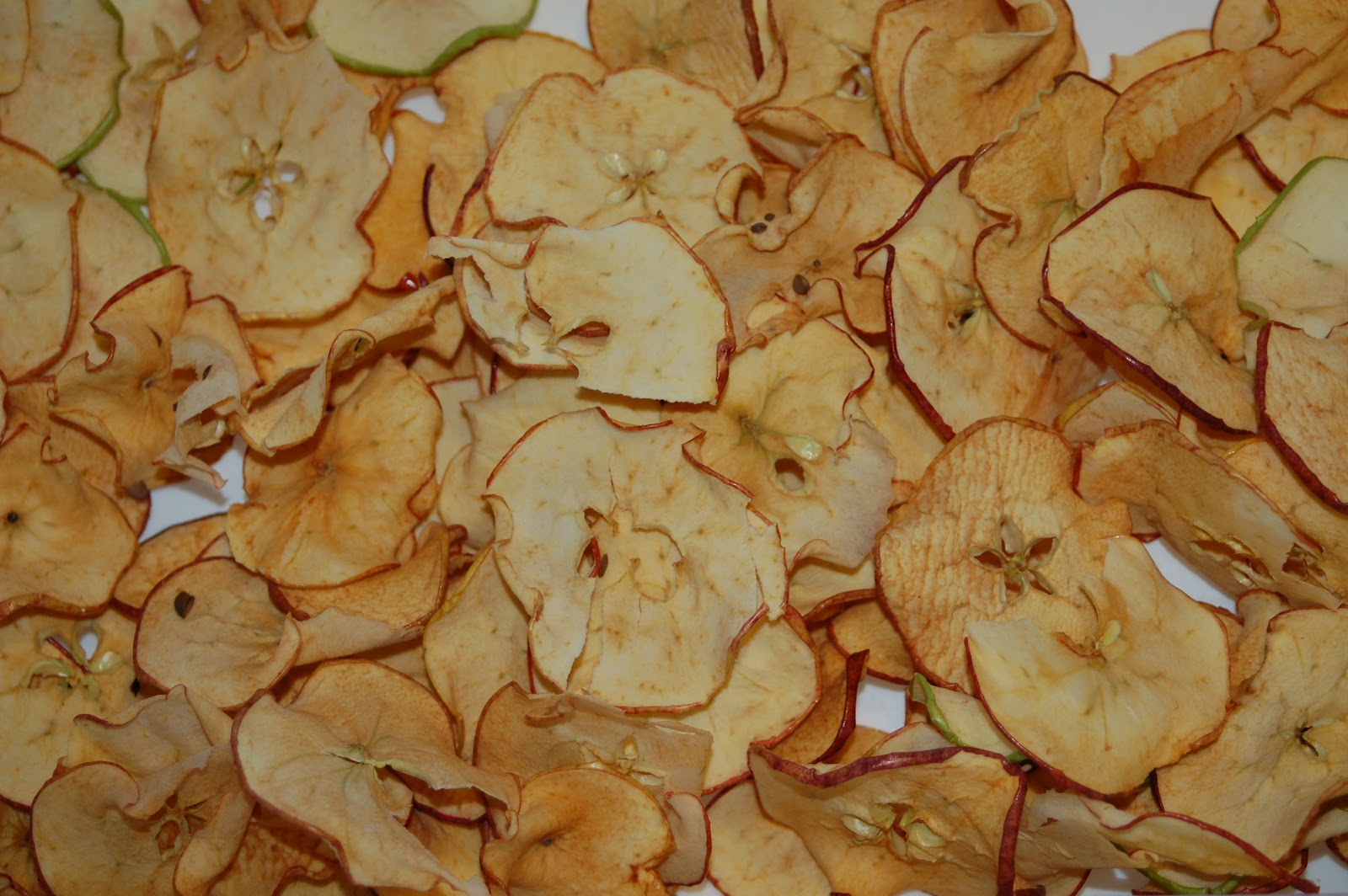
Apple Slices

A few starter tips:

  • Even slices mean even drying. Try to cut ...your slices thin and even.
  • Use a mandolin slicer if you have one. Makes the job a lot easier.
  • If you wash your veggies first, you might want to use your salad spinner get rid of excess moisture.
  • Fruits with high sugar content - spray your fruit leather trays first to keep from sticking.
  • Drippy things or things that will fall through the slots when dried because of shrinkage - put a fruit leather tray or cut piece of wax paper on the bottom rack. 
  • The foods listed below do not need cooking, blanching, or treating before dehydrating.   
Slice And Go:

  • Celery
  • Onions - NOT Vidalias, the high sugar content will caramelize... they become rubbery but so impart the good flavor; I just didn't like the "chewiness" in my soups
  • Bell peppers
  • Cucumbers
  • Zucchini
  • Apples / pears - peel and core first
  • Garlic
  • herbs
  • Greens - turnips, collards, spinach, beet, kale - wash & stem, salad spin, spread out whole on racks. Takes a bit of room, but well worth the effort
  • Cabbage, definitely cabbage! Chopped, diced, shredded. Cabbage can be cooked first. Just make sure you don’t use any fats or oils in the cooking.